
New ISO Vessel Hull Cleaning Standard Published
Mar 12, 2026
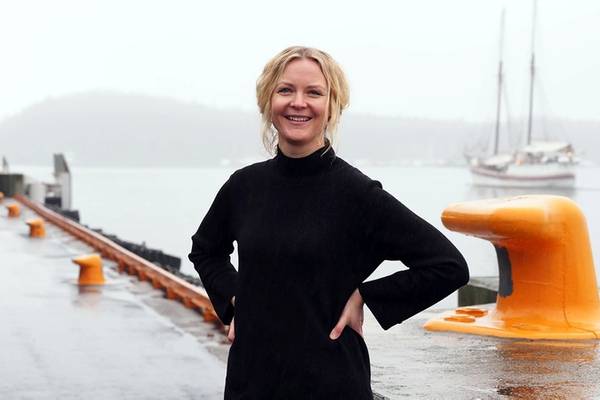
Irene Øvstebø Tvedten, Senior Adviser at Bellona.
Yesterday, a new ISO standard was published to help port authorities, shipowners and operators navigate rules on how ships should be cleaned in an environmentally sound way. Hull cleaning is gaining traction among shipowners, while countries are increasingly introducing regulations—but many ports still lack practical guidance on how to manage it.
“Biofouling on ships’ hulls can spread invasive aquatic species and damage ecosystems. It also increases drag, reducing a vessel’s efficiency and leading to higher fuel consumption and increased greenhouse gas emissions,” says Irene Øvstebø Tvedten, Senior Adviser at Bellona. Tvedten is the project manager for the Clean Hull Initiative (CHI) and has led the work on the new ISO-standard known as ISO 6319, titled “Conducting and documenting in-water cleaning of biofouling on ships”.
One of the key solutions for managing biofouling on ships — hull cleaning — can help prevent the spread of invasive aquatic species and reduce greenhouse gas emissions. ISO 6319 supports these practices by ensuring that hull cleaning is carried out responsibly and does not release organisms or chemicals into the environment.
“On Wednesday, the standard was finally published, and I’m delighted to share that it is now available for global stakeholders in shipping and ports,” says Tvedten.
ISO 6319 aims to help ports and regulators request documentation from service providers intending to clean ship hulls, making it easier to assess whether the technology used provides adequate environmental protection.
 Port Environment Expert at Port of Antwerp-Bruges, Luc Van Espen
One of the contributors to ISO 6319 was Port Environment Expert at Port of Antwerp-Bruges, Luc Van Espen. He explains that at the Port of Antwerp-Bruges, hull cleaning is permitted as part of the port’s commitment to sustainable shipping.
“An internationally accepted and applied standard creates a level playing field among seaports worldwide, strongly limiting the transfer of invasive alien species from one port to another,” says Van Espen.
Globally, approval procedures vary widely among ports and authorities, creating challenges for shipowners. Wallenius Wilhelmsen, a leading global RoRo operator, was among the shipowners contributing to ISO 6319 and is working to lower fleet emissions through enhanced hull maintenance.
"When applications follow the same structure and technical specifications, ports and authorities can process them more efficiently. For us as a shipping company, this means fewer operational disruptions and greater predictability,” says Senior Manager Kim-Helge Brynjulfsen at Wallenius Wilhelmsen.
Another contributor to ISO 6319 was Jotun, a global leader in marine coatings to tackle biofouling, which also offers a proactive hull-cleaning robot and compatible coatings.
“At Jotun, we find that many ports and authorities lack detailed knowledge about hull cleaning and are often unnecessarily sceptical of cleaning ships. ISO 6319 can help ports assess permits on a case-by-case basis, depending on whether the hull cleaning technology sufficiently protects the environment. There are significant quality differences between hull cleaning systems,” says Petter Korslund, Regulatory Affairs Manager at Jotun, one of the many contributors to the new standard.
“ISO 6319 helps guide approval authorities as to what the actual risks of cleaning are and how to manage and mitigate those risks to the greatest extent possible while promoting the environmentally-sound cleaning of ships.” says Mark Riggio, one of the contributors to ISO 6319, and technical director at BEMA, an organisation consisting of several hull-cleaning service providers.
“In the group developing this standard, competitors have put commercial interests aside and collaborated to set the terms for hull cleaning. I’m truly impressed by their efforts,” says Tvedten.
Originally, the standard was initiated by the Clean Hull Initiative, which consists of a range of stakeholders with a shared interest in proactive hull cleaning—meaning sufficiently frequent cleaning to maintain a thin layer of biofouling on the hull. The group produced the original draft four years ago, under the leadership of Bellona.
“Ports and regulators play a key role in enabling or prohibiting hull cleaning. ISO 6319 will help them make informed decisions," Tvedten concludes.
Technology
Legal
Ports
Environmental
Government Update
Regulation
infrastructure
port
Green Ports
Port Infrastructure
Hull Cleanning