
Neoliner Origin: Wind Power Delivers 70% Fuel Savings, Tech Challenges Remain
Nov 5, 2026
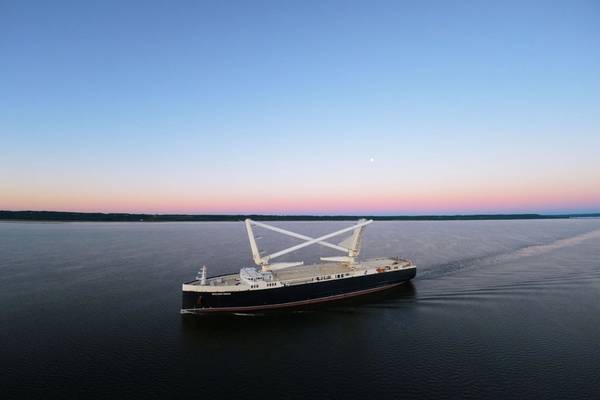
Photo credit: Arthur Jacobs
After its first year of transatlantic service, NEOLINE's wind-powered cargo ship demonstrates the potential for substantial fuel savings, while technical issues highlight the challenges of bringing sail propulsion into mainstream commercial shipping.
For all the discussion surrounding shipping's decarbonization, the commercial equation for alternative propulsion technologies remains relatively straightforward: How much does the technology cost, how much fuel can it save, and how quickly can the investment be recovered?
Wind Assisted Propulsion Systems (WAPS) remain a small fraction of the global commercial fleet, but interest continues to grow as shipowners evaluate technologies capable of reducing fuel consumption and operating expenses. For French shipping company NEOLINE, the first year of operation of Neoliner Origin provides some compelling numbers, along with a reminder that deploying new propulsion technology at commercial scale is rarely straightforward.
Commissioned in October 2025, the 136-m (446-ft.) RoRo cargo ship was designed around wind as its primary propulsion source, rather than simply adding sails to supplement conventional machinery.
During its first year, Neoliner Origin completed nine commercial transatlantic round trips, covering more than 62,000 nautical miles. The vessel transported 1,845 cargo units totaling approximately 12,063 metric tons and 55,889 cu. m., including vehicles, containers, industrial machinery, oversized equipment and refrigerated cargo.
Its regular service connects Montoir-de-Bretagne, France, with Saint-Pierre-et-Miquelon, Baltimore and Halifax. Zeebrugge, Belgium, was added in September 2026.
The most significant result, however, is fuel consumption. According to NEOLINE, Neoliner Origin saved approximately 3,502 metric tons of fuel during its first year compared with the fleet reference established by the Global Logistics Emissions Council (GLEC). That represents a 66% reduction across the full operating period, increasing to 70% when considering 2026 alone. The company estimates the corresponding reduction in carbon dioxide emissions at 11,228 metric tons.
NEOLINE also evaluated performance against a simulated conventional ro-ro vessel operating the same routes at 15 knots without sails. Under that comparison, fuel savings ranged from 62% to 67%, although the company acknowledges methodological uncertainty associated with voyage scheduling and arrival-time adjustments.
These are substantial reductions in fuel consumption, but translating them into a financial return requires additional information. NEOLINE has not disclosed the vessel's construction premium, total propulsion system investment, maintenance costs or realized fuel expenditure savings. Consequently, the available figures demonstrate the potential operating benefit but do not establish a payback period.
When its SolidSail rig is fully operational, Neoliner Origin has regularly exceeded 15 knots under sail alone, reaching 16.6 knots through the water in June 2026 with its engine stopped.
However, problems affecting the sails have restricted their availability, particularly when operating with the full sail arrangement deployed. NEOLINE is working with Chantiers de l'Atlantique to address these issues, with maintenance scheduled for February 2027 to restore full rig operation.
The company is targeting fuel savings of at least 78% against the GLEC reference during 2026-2027, with management expressing confidence that savings could approach or exceed 80% in 2027.
For shipowners evaluating WAPS, the experience offers both encouragement and caution. The potential fuel reductions are considerable, but system reliability, maintenance requirements and commercial schedule performance will ultimately determine the economics. ⓒ PSA Zeebrugge
Technology
Ports
Green Ports
wind assisted propulsion