
Green Ammonia Shines When Regulation is Considered, says study
Mar 19, 2026
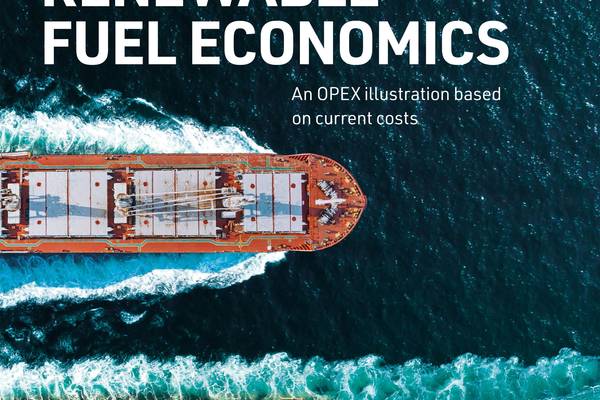
A new analysis from WinGD and Envision Energy suggests something the maritime industry has been debating for years ... and likely will be debating for many years to come: the changing economics of zero-emission fuels.
For shipowners, the significance is straightforward. The conversation is shifting from if green fuels can compete to when — and in some cases, that answer may already be “now.”
On a pure fuel-cost basis, green ammonia still carries a premium, as today, it can run close to three times the cost of very low sulphur fuel oil. That gap has long been and will continue to be the primary barrier to adoption. But when operating costs are modeled under a realistic regulatory environment, specifically one that includes carbon penalties and compliance mechanisms, the picture changes.
The study suggest that under a moderate global framework, green ammonia-fueled vessels can match or even outperform conventional ships on total operating cost. That’s not because the fuel itself is suddenly cheap, but because emissions carry a growing price. Ships burning conventional fuels accrue penalties, while low- and zero-carbon vessels generate value through avoided costs and tradable credits.
In practical terms, that means a vessel running on green ammonia can begin to close the gap with VLSFO and LNG without relying on subsidies or incentives layered on top. For certain vessel types and trading patterns, it can already come out ahead over the early years of a regulatory regime.
Among the alternative fuels assessed, ammonia stands apart. Unlike methanol or synthetic LNG, it contains no carbon, eliminating CO₂ emissions at the point of combustion. That matters not just environmentally, but economically. Lower emissions translate directly into lower compliance costs and greater upside in a carbon-constrained market.
At the same time, supply is beginning to move beyond theory. Large-scale production projects are already online, with more capacity coming. That starts to address another key concern for owners: whether the fuel will be available at scale and at predictable prices.
Looking further out, the advantage becomes more pronounced. Over a full vessel lifecycle, ammonia-fueled ships are projected to deliver meaningful operating cost savings compared to both LNG and conventional fuel. In some scenarios, those savings reach into the tens of millions of dollars.
But anchored in reality is the fact that the upfront investment remains higher, both in terms of fuel systems and vessel design. Owners also have to contend with technology gaps, particularly around auxiliary engines and onboard integration, where conventional fuels are still often part of the mix.
Legal
Shipbuilding
Government Update
infrastructure
Alternative Fuels
The Path to Zero
Future Fuels
Maritime Propulson
Green Ports