
China Demand Buoys Coal Shipments 14%
Jul 2, 2026
Courtesy BIMCO
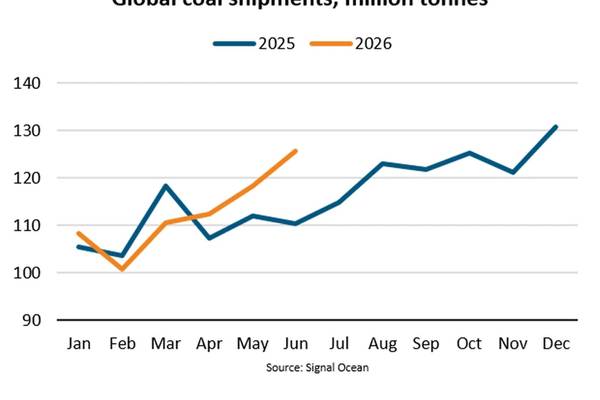
“In June 2026, global coal shipments jumped 14% y/y, driven by a 41% y/y increase in coal shipments to China, as the country looked to offset weaker domestic supply and to meet higher demand from electricity generation. Since the start of the year, global coal shipments have risen 3% y/y, a reversal of last year’s trend, when they fell 4% y/y,” says Filipe Gouveia, Shipping Analysis Manager at BIMCO.
So far this year, coal shipments to China have fallen 3% y/y, only accelerating from May 2026. This increase was driven by a weakening in China’s domestic coal production, partly due to a mining accident in Shanxi on 28 May 2026. Following the incident, 109 mines in Shanxi were temporarily shut down and safety inspections were carried out. Some of those mines started reopening in June, but output appears to still be lagging pre-accident levels.
Coal shipments to Korea, Japan and the EU remained strong in June, rising 25%, 13% and 15% y/y, further supporting global volumes. These countries have sought alternative energy supplies amidst a tightness in LNG shipments since March 2026, due to the transit disruptions in the Strait of Hormuz.
“The rise in coal volumes has had a positive impact on the dry bulk market, and particularly on the panamax segment, as coal accounted for around half of the segment’s tonne mile demand in June. This contributed to a strengthening in freight rates for the segment, with S&P Global Energy’s Platts KMAX 9 index rising 73% y/y in June,” says Gouveia.
On the export side, Indonesia and Russia saw the largest increases in shipments, rising 12% and 33% y/y in June. While the Indonesian government initially set a 600m tonne coal production target for the year, 24% below 2025 levels, it announced in June that the quota would be expanded.
The outlook for coal shipments during the rest of this year appears mixed. Coal production in China could strengthen once inspections come to an end, which would negatively impact import demand. Conversely, the arrival of El Niño is expected to have a positive impact on coal demand in India and Southeast Asia. This is because El Niño tends to bring a weaker monsoon, and has already caused India’s dryest June in 12 years. This in turn has a negative impact on hydroelectric power generation in the region.
“Conditions in the Strait of Hormuz remain a key uncertainty for the outlook for coal shipments, since a full and lasting reopening of the strait could weaken coal import demand in markets such as Korea, Japan and the EU. The US-Iran ceasefire agreement has already led to an increase in the number of ships transiting the strait, but operational and security challenges persist. Furthermore, a sustained return to normal transit conditions could still depend on a final peace agreement,” says Gouveia.
Ports
China
Cargo
coal
Imports
Exports
Coal Carriers